
 en
en
 Español
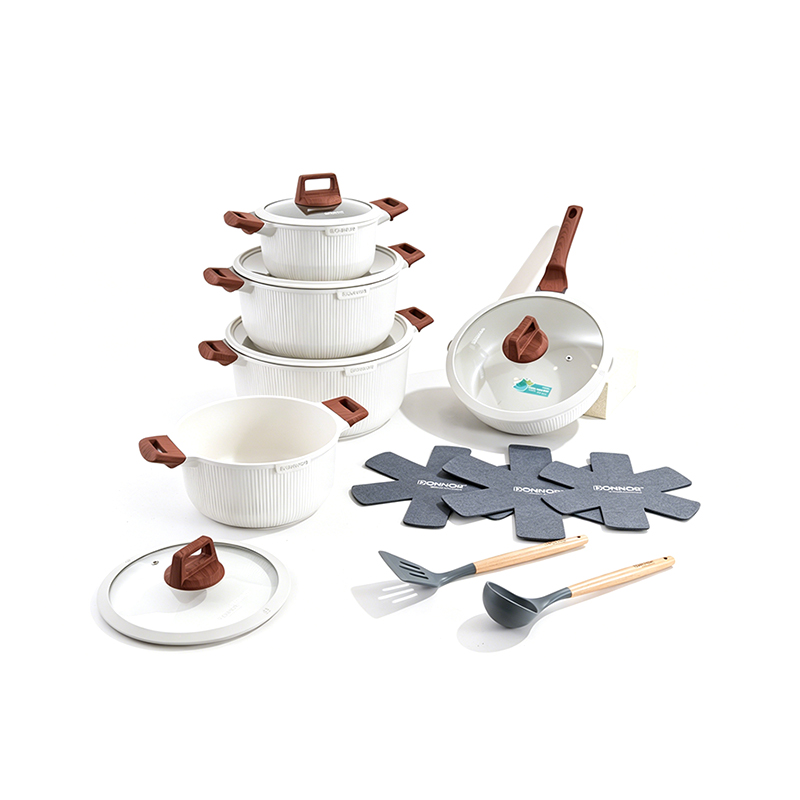
This cookware set features a non-stick coating, even heat conduction, and multi-...
See Details
Does PFOA-free cookware still raise hidden chemical safety questions for consumers
Date:Jul 24, 2026
Cookware packaging has changed significantly over the past decade. Labels such as "PFOA-Free," "healthy coating," "non-toxic," and "eco-friendly" appear on countless frying pans, saucepans, and cookware sets. These statements provide reassurance for many shoppers, yet they also raise an important question: does a PFOA-free label fully address chemical safety concerns?
Modern cookware has become safer than earlier generations, largely because PFOA is no longer used during the manufacturing process of non-stick coatings. Nevertheless, chemical safety discussions have shifted toward coating composition, PFAS terminology, coating durability, and long-term food-contact performance. Understanding these topics helps consumers evaluate cookware based on technical facts instead of packaging alone. PFOA has been phased out of cookware manufacturing for years, but experts emphasize that the label alone does not describe every aspect of a product's chemical profile.
Why PFOA-Free Became an Industry Standard
PFOA (Perfluorooctanoic Acid) was previously used as a processing aid during the production of certain fluoropolymer coatings. Due to growing environmental and health concerns, manufacturers gradually eliminated its use.
Today, nearly every reputable non-stick cookware brand promotes PFOA-free production.
- Improved manufacturing processes eliminate the historical use of PFOA.
- Updated regulations encourage cleaner production technologies.
- Consumer awareness has made chemical transparency a purchasing priority.
Although this represents meaningful progress, experts generally agree that the phrase "PFOA-Free" should be viewed as one safety indicator rather than a complete assessment.
Understanding What the Label Actually Means
Many shoppers assume PFOA-free automatically means completely chemical-free. That interpretation is not always accurate.
PFOA refers to one individual chemical that was previously associated with manufacturing certain non-stick coatings. A cookware product may no longer contain PFOA while still using other coating technologies designed to create non-stick performance.
- PFOA-Free indicates that PFOA was not intentionally used during production.
- PTFE refers to the non-stick polymer itself rather than PFOA.
- PFAS represents a much broader family of fluorinated chemicals.
Because these terms describe different aspects of cookware chemistry, understanding the distinction helps consumers compare products more accurately.
Healthy Coatings Depend on More Than One Ingredient
A high-quality PFOA-Free Healthy Coating Cookware product is designed around an entire coating system instead of focusing on a single chemical claim.
Manufacturers increasingly improve coating performance through multilayer structures, reinforced bonding layers, and smoother surface technologies that reduce wear during everyday cooking.
- Primer layers improve adhesion between aluminum and the coating.
- Intermediate reinforcement layers increase abrasion resistance.
- Food-contact layers provide non-stick performance during cooking.
The overall coating architecture often influences long-term durability more than a single marketing statement printed on the package.
Coating Durability Plays a Major Role in Safety
Chemical stability is closely connected with physical durability. Even advanced coatings gradually wear after repeated heating, washing, and utensil contact.
Many premium cookware products now use three-layer or reinforced coating systems with thicknesses typically ranging from approximately 25–45 μm to improve resistance against scratches and daily abrasion.
- Wooden or silicone utensils help reduce surface damage.
- Moderate cooking temperatures help maintain coating stability.
- Gentle cleaning methods preserve protective surface layers.
Long-lasting coatings reduce direct exposure of the aluminum substrate while maintaining cooking performance throughout the product's service life.
Temperature Still Matters During Everyday Cooking
Modern non-stick cookware is engineered for normal household cooking, but extremely high temperatures can shorten coating lifespan regardless of the manufacturing technology.
Many industry recommendations advise avoiding empty-pan heating and unnecessary overheating. PTFE-based coatings generally remain stable during ordinary cooking but may begin degrading at temperatures above approximately 260°C (500°F).
- Medium heat supports consistent cooking performance.
- Gradual preheating reduces thermal stress.
- Avoiding empty heating helps protect coating integrity.
Proper daily use contributes as much to cookware longevity as manufacturing quality.
Should Buyers Look Beyond the PFOA-Free Label?
Consumers increasingly compare cookware based on environmental responsibility, chemical transparency, and long-term durability.
Instead of focusing only on one statement, buyers benefit from reviewing additional technical information.
- Is the coating system clearly identified?
- Does the cookware comply with food-contact standards?
- Is the aluminum body forged, pressed, or die-cast?
- Does the manufacturer provide coating performance information?
- Are independent laboratory reports available?
Transparent product documentation usually provides greater value than simplified marketing language alone.
Material Transparency Is Becoming the New Standard
The cookware industry continues moving toward greater transparency as consumers ask more detailed questions about coating chemistry and product safety. Alongside PFOA-free production, manufacturers increasingly introduce PFAS-free coatings, ceramic alternatives, reinforced non-stick systems, and improved food-contact testing.
A well-designed PFOA-Free Healthy Coating Cookware product should combine durable construction, stable coating technology, verified food-contact compliance, and clear technical specifications. Rather than relying exclusively on a familiar label, comparing coating materials, testing information, temperature recommendations, and overall build quality provides a more complete picture of cookware safety throughout years of everyday cooking. Experts also note that "PFOA-free" should not automatically be interpreted as "PFAS-free," making transparent material disclosure increasingly valuable for informed purchasing decisions.
Recommended Articles
Product Category
Related products
-
-
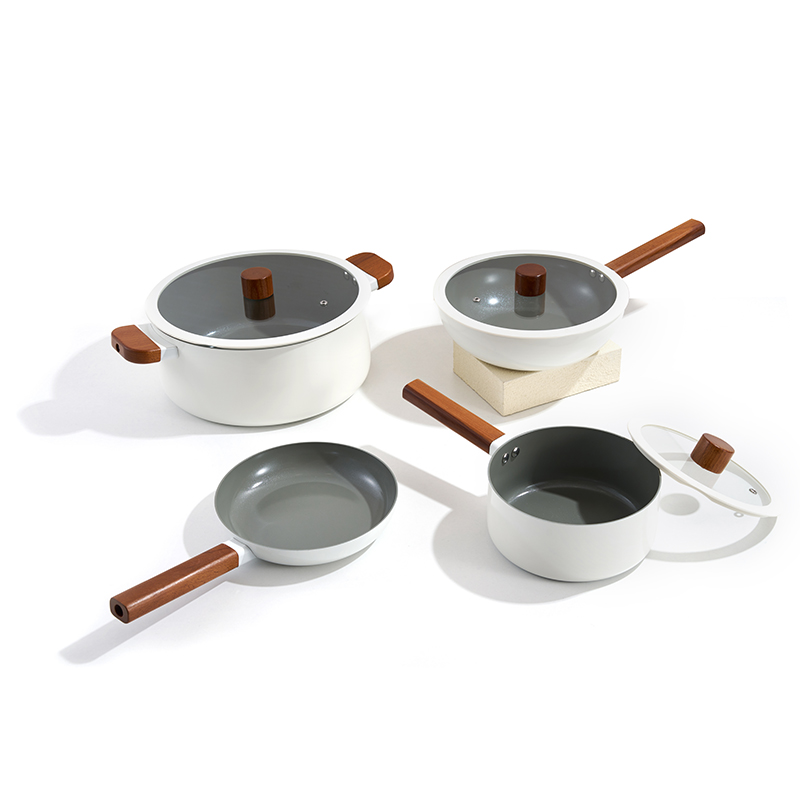
This cookware set has a ceramic non-stick inner liner, a heat-resistant wooden h...
See Details -
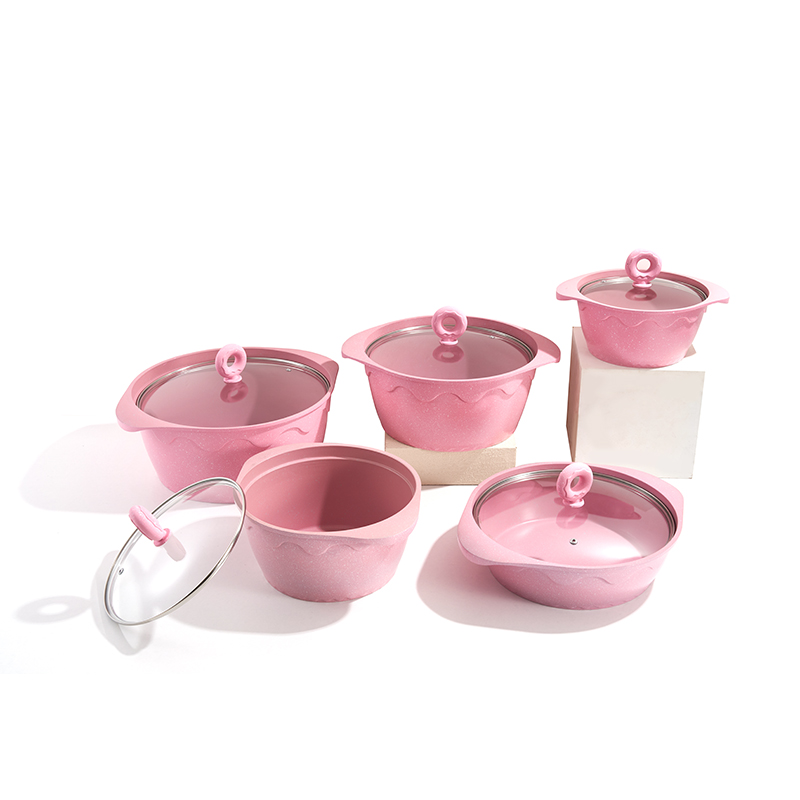
This cookware set is made of food-grade non-stick material, with a unique eye-ca...
See Details -
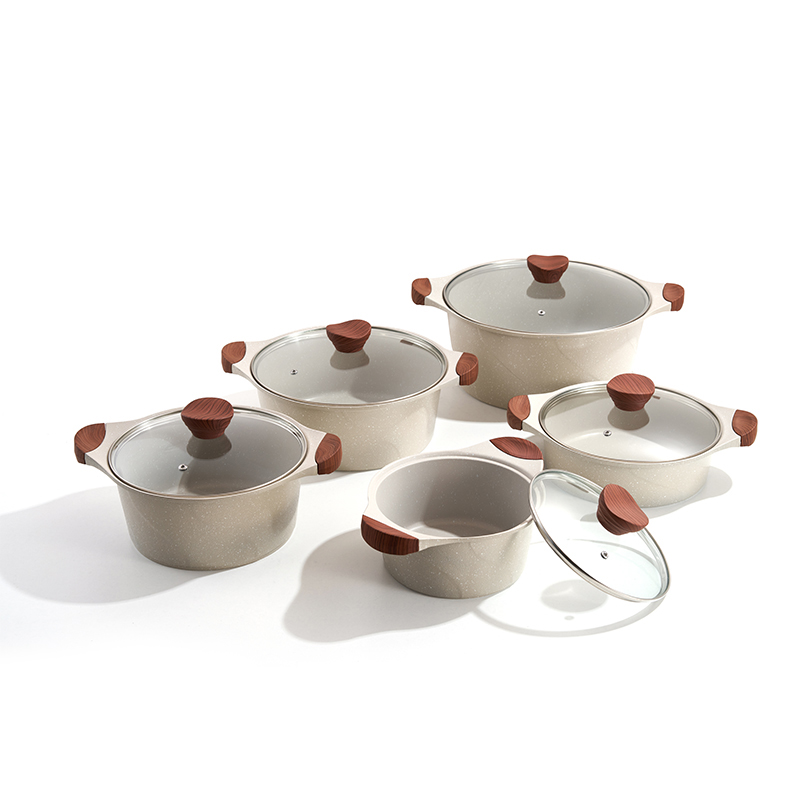
This off-white cookware set is made of wear-resistant non-stick material, with w...
See Details
Whether you're looking for bulk purchases or have any custom requirements, We are here to offer the best
solutions for you.
tiffany.zhong@echocn-trading.com
PHONE
+86-19561173975
+86-19557020621 (Hazel Wu)
ADD
Room 301, Unit 3014, No. 175 Qifeng Avenue, Wenqiao Town, Taizhou, Zhejiang, China
Fill Out the Form for More Information
Copyright © Zhejiang Echo Industry And Trade Co., Ltd.
All Rights Reserved.

China Cookware Set Manufacturer